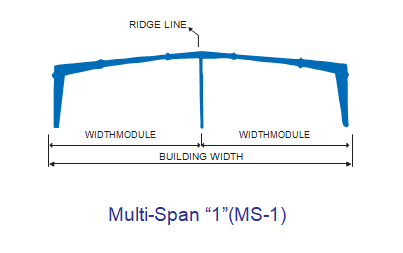
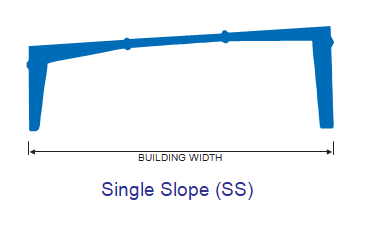
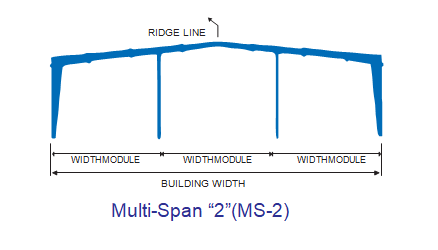

Invogue’s structural designs are meticulously engineered to align with the unique operational requirements of each client. Though our standard models typically feature symmetry across the ridge line, we also specialize in asymmetrical configurations and multi-span systems with variable module widths. We check these special designs thoroughly to ensure they are durable and meet all performance standards.
The primary framing member encompasses all critical structural components responsible for transferring gravitational and lateral loads directly to the foundations and is comprises of:
Intermediate Frames
The central skeleton supporting the building’s load. These frames consist of built-up welded members. Frames are complemented by flange bracings, connection bolts & anchor bolts. Column bases are usually pinned. Fixed connection, if required as per design, can also be provided.
Endwall Frames
Designed for longitudinal stability and future expansion. These end wall frames consist of built-up welded members. Frames are complemented by connection bolts, anchor bolts & wind bracings, if required.
Secondary framing comprises high-precision components that stabilize the roof and wall cladding while efficiently transferring loads to the primary structural steelwork. This integrated system, principally including Roof Purlins, Wall Girts, and Eave Struts, is engineered to minimize lateral displacement, optimize material efficiency, and ensure the long-term rigid alignment of the building envelope.
Roof Purlins: Roof Purlins are cold-formed Z-profiles, normally 200 to 250 mm deep, made from 1.6 mm to 3 mm thick steel. These are fixed to the top flange of the rafters by means of clips bolted to the rafters, and the purlin webs are bolted to the clips. Purlin ends are overlapped to act as continuous beams.
Wall Girts: Wall Girts are cold-formed Z-sections, normally 200 to 250 mm deep, made from 1.6 mm to 3 mm thick steel. These are fixed to the outer flange of the sidewall columns by means of clips bolted to the column, and the girt webs are bolted to the clips. Girt ends are overlapped to act as continuous beams.
Eave Struts: Eave Struts are C-profiles, normally 200 to 250 mm deep, made from 2 mm to 3 mm thick steel. These are fixed to the outer flange of the sidewall columns by means of clips bolted to the column, and the eave strut bottom flange is bolted to the clips.
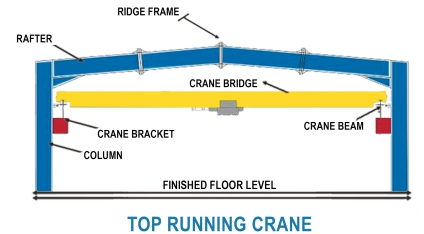
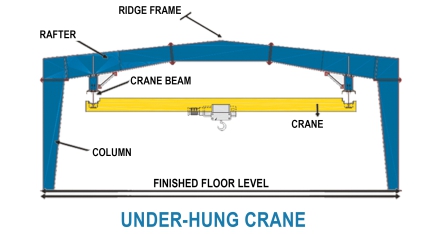
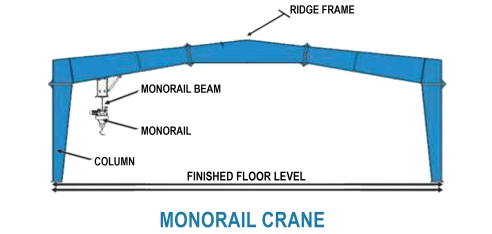
Invogue’s PEB can be designed to accept most types of crane systems such as EOT, Monorail, Under-hung cranes and other load carrying devices like conveyors etc., in both clear span and multi span buildings. When a crane system is to be integrated, Invogue’s scope is limited to brackets and crane runway beams which support the crane system. Complete information on the crane systems is required in order to design and estimate buildings with cranes.
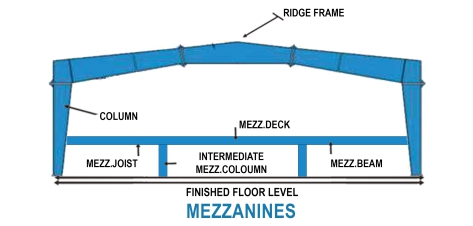
Intermediate mezzanine floors are possible in metal building, mezzanine can be provided in complete or partial area in PEB to suit loading requirement for office or storage. Mezzanine floors consist of Chequered Plate or Galvanized Decking Sheet, supported by joists connected to main mezzanine beams. Main beams normally run across the width of building and are located under main rafters while joists run parallel to length of building. Top flange of joists fit immediately below the top flange of mezzanine beam. A reinforced concrete slab (not supplied by Invogue) is casted on top of Galvanized decking sheet.
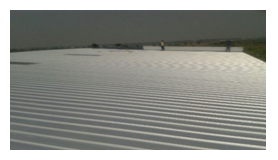
These systems consist of high-performance corrugated metal sheets engineered to provide superior structural integrity. These lightweight profiles offer a 1000 mm effective coverage width with a 30 mm rib depth positioned at 200–250 mm center-to-center (c/c). Incorporating two or three longitudinal stiffening ribs, this design stands as the most robust profile within its specialized category.
Hi-Rib Profile sheet
Standing Seam
Insulated Panels
Head Office: Plot no. 17, 1st floor, Patparganj Industrial Area, Delhi-110092
Branch: H. No.1205, 2nd Floor, Vill-Azara, Ozapara, Opposite Pooja Apartment, Distt. Kamrup Metro, Guwahati, Assam-781017
Factory(Plant 1): Plot no. 3H, 3I, Ecotech-2 (Udyog vihar), Greater Noida, G.B. Nagar, U.P.-201306
Factory(Plant 2): Khasra No - 180K, 180KH, 180G, 180GH, Yusufpur Isapur, Modinagar - Hapur Road, Tehsil - Modinagar, District - Ghaziabad, Uttar Pradesh -245304